IPTV Encoder Encoders are the unsung heroes of modern digital television, transforming raw video signals into a streamable format that can be delivered over IP networks. Understanding the intricacies of IPTV Encoder Encoders is crucial for anyone involved in broadcasting, content delivery, or simply looking to set up a robust IPTV system. These devices are the cornerstone of high-quality, reliable, and scalable IPTV services, ensuring that viewers receive crystal-clear content with minimal latency. As we move into 2025, the technology behind IPTV Encoder Encoders continues to evolve, offering more advanced features and greater efficiency.
Table of Contents
- The Fundamental Role of IPTV Encoder Encoders in Content Delivery
- Types of IPTV Encoder Encoders: Hardware vs. Software
- Key Features to Look for in Modern IPTV Encoder Encoders
- Optimizing Your IPTV Encoder Encoders for Peak Performance
- Integrating IPTV Encoder Encoders with Your Existing Infrastructure
- Future Trends and Innovations in IPTV Encoder Encoders for 2025
- FAQ
- Related IPTV Services
The Fundamental Role of IPTV Encoder Encoders in Content Delivery
At its core, an IPTV encoder is a device or software that takes an audio-visual input (like a live camera feed, a satellite dish, or a media server) and converts it into a digital stream suitable for IP network transmission. This conversion process involves several critical steps, including compression, formatting, and encapsulation. Without efficient IPTV Encoder Encoders, the dream of delivering television over the internet would remain just that – a dream. They are the bridge between traditional broadcast signals and the dynamic world of IP-based content distribution.
The importance of high-quality encoding cannot be overstated. A poorly encoded stream can lead to pixelation, audio-video synchronization issues, and increased bandwidth consumption, all of which detract from the viewer experience. Modern IPTV Encoder Encoders are designed to optimize these processes, balancing picture quality with bandwidth efficiency. This is particularly vital in an era where consumers expect flawless streaming across a multitude of devices, from smart TVs to mobile phones.
Furthermore, the evolution of video standards, such as HEVC (H.265), has significantly impacted the capabilities of IPTV Encoder Encoders. These newer codecs allow for even greater compression ratios without sacrificing visual fidelity, making it possible to deliver 4K and even 8K content over existing network infrastructures. Choosing the right encoder, therefore, involves a careful consideration of supported codecs, input types, and output formats to ensure compatibility and future-proofing of your IPTV system.
For those looking to explore the comprehensive offerings of an IPTV service, including various channels and device compatibility, you might want to check out IPTV Expres Channels to see the breadth of content available.
Types of IPTV Encoder Encoders: Hardware vs. Software
When delving into the world of IPTV Encoder Encoders, one of the first distinctions you’ll encounter is between hardware and software-based solutions. Each has its own set of advantages and disadvantages, making the choice dependent on specific operational needs, budget constraints, and scalability requirements. Understanding these differences is key to making an informed decision for your IPTV infrastructure.
Hardware encoders are dedicated physical devices designed specifically for the task of encoding video. They typically offer superior performance, lower latency, and greater reliability due to their optimized architecture and dedicated processing power. These units are often preferred for mission-critical applications, such as live broadcasting, where even a momentary interruption can have significant consequences. Their robust nature makes them ideal for continuous operation in data centers and broadcast facilities. However, they can be more expensive and less flexible than their software counterparts, often requiring specialized knowledge for setup and maintenance.
Software encoders, on the other hand, run on general-purpose computers and utilize the system’s CPU or GPU for encoding tasks. They offer greater flexibility, scalability, and are generally more cost-effective, especially for smaller operations or those with fluctuating encoding needs. Software solutions can be easily updated and customized, allowing for rapid adaptation to new codecs or streaming protocols. The trade-off often lies in performance, as they can be more susceptible to system resource contention and may introduce higher latency compared to dedicated hardware. However, advancements in computing power and GPU-accelerated encoding have significantly narrowed this performance gap, making software IPTV Encoder Encoders a viable option for many applications.
Many providers, like IPTV Expres Devices, offer compatibility with various encoding setups, ensuring flexibility for users regardless of their chosen encoder type.
Key Features to Look for in Modern IPTV Encoder Encoders
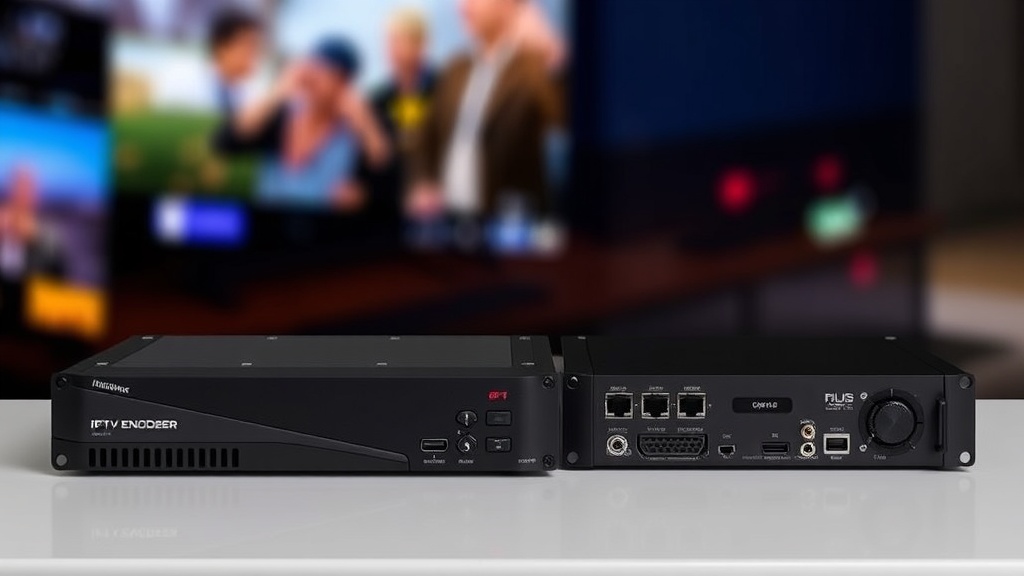
As the IPTV landscape evolves, so do the capabilities of IPTV Encoder Encoders. Selecting the right encoder in 2025 requires a keen understanding of the features that contribute to a robust, efficient, and future-proof system. Beyond basic encoding, several advanced functionalities can significantly enhance performance and operational flexibility.
One crucial feature is support for multiple output streams and adaptive bitrate (ABR) streaming. This allows a single input source to be encoded into several different resolutions and bitrates simultaneously, catering to various devices and network conditions. ABR ensures that viewers receive the best possible quality stream that their device and internet connection can handle, minimizing buffering and maximizing viewer satisfaction. Without this, viewers on slower connections might experience constant interruptions, while those on faster ones might be stuck with lower-quality video.
Another increasingly important aspect is low-latency encoding. For live events, gaming, or interactive applications, minimizing the delay between the live action and its display on the viewer’s screen is paramount. Advanced IPTV Encoder Encoders incorporate technologies like ultra-low latency codecs and optimized processing pipelines to achieve near real-time delivery. This is a critical factor for competitive streaming and interactive content where immediate feedback is essential.
Finally, robust error correction and redundancy features are vital for maintaining stream integrity. Networks are inherently unpredictable, and packet loss can degrade video quality. Encoders with built-in error correction mechanisms and support for redundant streaming paths can help mitigate these issues, ensuring a more resilient and reliable viewing experience. These features are often overlooked but are crucial for professional-grade IPTV services that demand consistent uptime and high-quality delivery.
Optimizing Your IPTV Encoder Encoders for Peak Performance
Achieving peak performance from your IPTV Encoder Encoders goes beyond simply purchasing the latest hardware or software. It involves a strategic approach to configuration, network management, and continuous monitoring. Proper optimization ensures that you are getting the most out of your investment, delivering high-quality streams while minimizing operational costs.
One of the primary areas for optimization is codec selection and bitrate management. While newer codecs like HEVC offer better compression, they also require more processing power. Balancing the desired video quality with available bandwidth and encoding resources is a delicate act. Experimenting with different bitrates and resolutions for various content types and target audiences can yield significant improvements. For instance, fast-paced sports might benefit from higher bitrates to reduce motion artifacts, while static content might be acceptable at lower rates.
Network infrastructure plays an equally critical role. Even the most powerful IPTV Encoder Encoders will struggle if the network they operate on is congested or poorly configured. Ensuring a stable, high-bandwidth connection with low latency between the encoder and the streaming server is paramount. Quality of Service (QoS) settings on network devices can prioritize video traffic, preventing other network activities from impacting stream quality. Furthermore, deploying encoders geographically closer to your audience or content sources can help reduce latency and improve overall performance.
Regular maintenance and software updates are also essential. Firmware updates for hardware encoders and software patches for software encoders often include performance enhancements, bug fixes, and support for new features. Staying current ensures that your IPTV Encoder Encoders are operating at their best and are protected against potential vulnerabilities. Moreover, continuous monitoring of encoder performance metrics, such as CPU usage, temperature, and stream health, can help identify and address issues before they impact viewers.
Integrating IPTV Encoder Encoders with Your Existing Infrastructure
The successful deployment of IPTV Encoder Encoders relies heavily on their seamless integration with existing broadcast and IT infrastructure. This involves understanding various input/output formats, network protocols, and content management systems. A well-integrated setup ensures a smooth workflow, from content acquisition to final delivery, minimizing manual intervention and potential points of failure.
Input flexibility is a key aspect of integration. Modern IPTV Encoder Encoders should support a wide range of input sources, including HDMI, SDI, composite video, and IP streams (like RTMP, SRT, NDI). This versatility allows them to connect to virtually any video source, from professional cameras and broadcast mixers to digital signage players and media servers. The ability to handle multiple input types within a single encoder can also simplify your setup and reduce hardware requirements.
Output compatibility is equally important. Encoders must generate streams in formats that are compatible with your chosen streaming platforms, content delivery networks (CDNs), and end-user devices. This often includes HLS, DASH, RTMP, and UDP/RTP. Ensuring that your IPTV Encoder Encoders can output these various formats, potentially simultaneously, provides the flexibility needed to reach a broad audience across different platforms. For detailed information on pricing and available packages, please visit IPTV Expres Pricing.
Beyond video and audio, integration with control systems and APIs is becoming increasingly vital. Many professional IPTV Encoder Encoders offer robust APIs that allow for remote control, automation, and integration with broader broadcast automation systems. This enables operators to manage encoders from a central console, schedule encoding tasks, and even dynamically adjust settings based on live events or network conditions. Such integration streamlines operations, reduces human error, and enhances the overall efficiency of your IPTV delivery pipeline.
Future Trends and Innovations in IPTV Encoder Encoders for 2025
The landscape of IPTV Encoder Encoders is constantly evolving, driven by advancements in video technology, network infrastructure, and consumer demands. Looking ahead to 2025, several key trends and innovations are poised to reshape how content is encoded and delivered, offering exciting possibilities for broadcasters and content providers.
One significant trend is the increasing adoption of AI and machine learning for encoding optimization. AI algorithms can analyze video content in real-time, intelligently adjusting encoding parameters (like bitrate, resolution, and GOP structure) to achieve optimal quality at the lowest possible bandwidth. This “smart encoding” can lead to substantial cost savings on bandwidth and storage while improving the viewer experience. AI can also be used for automated content moderation, scene detection, and even personalized content delivery, further enhancing the capabilities of IPTV Encoder Encoders.
Another area of rapid development is the rise of cloud-based encoding. Moving encoding operations to the cloud offers unprecedented scalability, flexibility, and cost-efficiency. Content providers can spin up encoding resources on demand, paying only for what they use, and easily scale to handle peak loads. Cloud-based IPTV Encoder Encoders also benefit from the robust infrastructure and global reach of cloud providers, enabling more resilient and geographically dispersed content delivery. This shift reduces the need for heavy upfront hardware investments and simplifies maintenance.
Finally, the continued push towards higher resolutions (8K and beyond) and immersive experiences (VR/AR) will necessitate even more powerful and efficient IPTV Encoder Encoders. This includes advancements in spatial and temporal compression techniques, as well as the development of new codecs specifically designed for these demanding formats. The integration of 5G networks will further accelerate these trends, providing the necessary bandwidth and low latency for delivering truly next-generation IPTV experiences. These innovations promise a future where IPTV is more dynamic, personalized, and visually stunning than ever before.
FAQ
What is an IPTV encoder?
An IPTV encoder is a device or software that converts audio and video signals from various sources (e.g., live cameras, satellite feeds, media players) into a digital stream format suitable for transmission over an Internet Protocol (IP) network. It compresses the data to reduce bandwidth requirements while maintaining video quality.
Why are IPTV Encoder Encoders important for IPTV services?
IPTV Encoder Encoders are crucial because they are the first step in making traditional video content accessible over IP networks. They transform raw video signals into a streamable format, enabling efficient delivery to a wide range of devices over the internet, ensuring high-quality and reliable viewing experiences for subscribers.
What’s the difference between hardware and software IPTV Encoder Encoders?
Hardware IPTV Encoder Encoders are dedicated physical devices offering high performance, low latency, and reliability, ideal for mission-critical applications. Software IPTV Encoder Encoders run on general-purpose computers, providing greater flexibility, scalability, and cost-effectiveness, suitable for various budgets and needs.
What features should I look for when choosing IPTV Encoder Encoders?
Key features include support for multiple output streams and adaptive bitrate (ABR) streaming, low-latency encoding for live content, and robust error correction mechanisms. Compatibility with various input/output formats and integration with control APIs are also important for efficient operation.
How can I optimize the performance of my IPTV Encoder Encoders?
Optimizing performance involves strategic codec selection and bitrate management, ensuring a stable and high-bandwidth network infrastructure with QoS settings, and regular maintenance through firmware and software updates. Continuous monitoring of performance metrics also helps in identifying and resolving issues promptly.
Related IPTV Services
You may also visit the following websites for similar services: