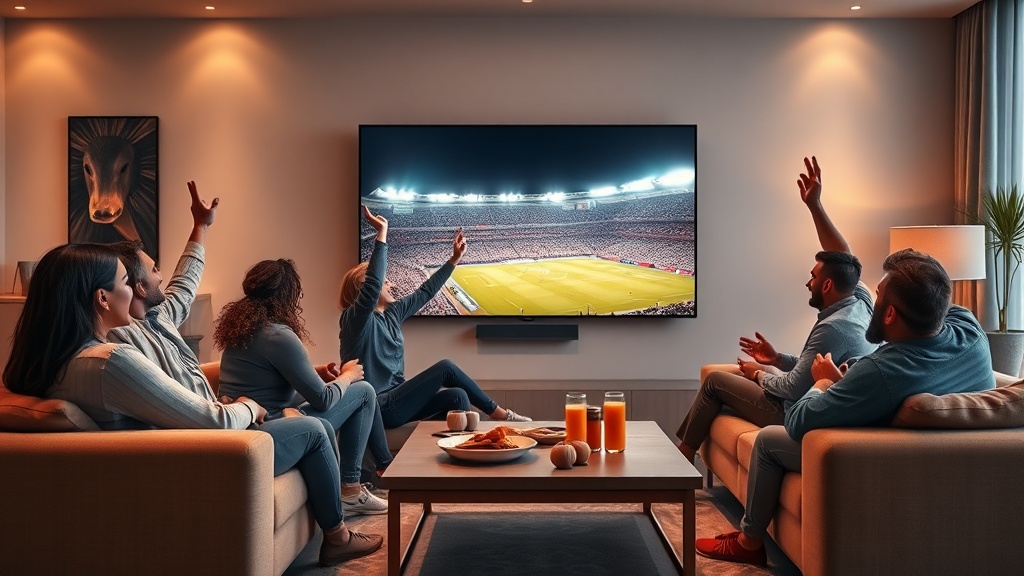
IPTV Streamers are revolutionizing how we consume television content, offering unparalleled flexibility and a vast array of choices. In 2026, the landscape of IPTV Streamers continues to evolve, bringing more advanced features, better picture quality, and seamless user experiences. Understanding the nuances of IPTV Streamers is crucial for anyone looking to cut the cord and embrace the future of digital entertainment. This comprehensive guide will delve into everything you need to know about these powerful devices and services.
Table of ContentsUnderstanding the Core of IPTV StreamersKey Features to Look for in Modern IPTV StreamersChoosing the Best IPTV Streamers for Your NeedsThe Evolution of IPTV Streamers and Future TrendsOptimizing Your Experience with IPTV StreamersTroubleshooting Common Issues with IPTV StreamersThe Impact of IPTV Streamers on Traditional TelevisionFAQs About IPTV StreamersRelated IPTV Services
Understanding the Core of IPTV Streamers
Internet Protocol Television (IPTV) delivers television content over Internet Protocol (IP) networks, rather than traditional terrestrial, satellite, or cable television formats. IPTV Streamers are the devices or software applications that facilitate the reception and playback of this content. Unlike conventional broadcasting, IPTV utilizes a broadband connection to deliver live TV, video-on-demand (VOD), and time-shifted media directly to your screen. This fundamental shift allows for a more personalized and interactive viewing experience.
The beauty of IPTV Streamers lies in their ability to bypass geographical restrictions and offer a global content library. Whether you’re interested in international news, sports from around the world, or niche entertainment channels, IPTV makes it accessible. The underlying technology ensures a stable and high-quality stream, provided you have a reliable internet connection. As technology advances, the capabilities of IPTV Streamers also expand, offering features like 4K streaming, multi-device support, and intuitive user interfaces.
Choosing the right IPTV service and compatible streamer can significantly enhance your home entertainment setup. Factors such as channel lineup, video quality, customer support, and pricing all play a critical role. Many providers offer different packages tailored to various preferences, from basic channel selections to premium bundles with extensive VOD libraries. Exploring IPTV Expres channels can give you a clear idea of the vast content available.
The rise of smart TVs has also influenced the development of IPTV Streamers. Many modern TVs come with built-in app stores that allow direct installation of IPTV applications, eliminating the need for external hardware. However, dedicated IPTV boxes or streaming sticks often provide more robust performance, better customization options, and support for a wider range of codecs and formats, making them a preferred choice for enthusiasts.
Key Features to Look for in Modern IPTV Streamers
When evaluating IPTV Streamers in 2026, several key features stand out as essential for a superior viewing experience. High-definition and ultra-high-definition (4K) support is now a standard expectation. Viewers demand crisp, clear images, and IPTV Streamers must be capable of delivering this quality without buffering or degradation. The processing power of the streamer plays a crucial role in rendering these high-resolution streams smoothly.
Another vital feature is a user-friendly interface. Navigating through hundreds or thousands of channels and VOD titles can be daunting if the interface is clunky or poorly designed. Look for IPTV Streamers with intuitive menus, easy search functions, and customizable layouts. Many advanced streamers now incorporate AI-driven recommendations, learning your viewing habits to suggest content you’ll love, thereby enhancing the overall user experience.
Compatibility with various devices is also paramount. Modern IPTV Streamers should ideally support multiple platforms, including smart TVs, smartphones, tablets, and computers. This multi-device support ensures that you can enjoy your content wherever you go, seamlessly switching between screens. Services like IPTV Expres devices offer broad compatibility, making it easier for users to access their content on their preferred gadgets.
Beyond basic streaming, advanced features like Electronic Program Guides (EPG), pausing and rewinding live TV, and recording capabilities are highly sought after. An EPG provides a TV guide-like interface, allowing you to see what’s on and what’s coming up. Time-shifting features offer greater control over live broadcasts, letting you watch on your own schedule. Cloud-based recording, in particular, has become a game-changer, allowing users to save their favorite shows without needing local storage.
Choosing the Best IPTV Streamers for Your Needs

Selecting the right IPTV Streamers involves understanding your specific requirements and budget. For casual viewers who primarily watch on their smart TV, a simple app might suffice. However, for those seeking a dedicated, high-performance solution, a specialized IPTV box or media player is often the better choice. These devices typically come with more powerful processors, ample storage, and a wider range of connectivity options.
Consider the operating system of the streamer. Android-based IPTV Streamers are popular due to their flexibility and access to a vast ecosystem of apps. They allow for extensive customization and often support third-party applications, providing more content options. Other operating systems, such as proprietary ones found in certain streaming sticks, might offer a more streamlined experience but with less flexibility.
Internet speed is a critical factor often overlooked. Even the best IPTV Streamers will struggle with poor internet connectivity. For high-definition streaming, a minimum of 10-20 Mbps is recommended, while 4K content requires at least 25-50 Mbps. Ensure your home network can handle the demands of IPTV streaming to prevent buffering and quality drops. A stable connection is just as important as speed.
Don’t forget about the content library. Before committing to a service or streamer, investigate the available channels and VOD options. Some services specialize in certain genres or regions, while others offer a more general selection. Reviewing IPTV Expres pricing and packages can help you determine what aligns best with your viewing preferences and budget. Free trials are an excellent way to test the service before making a long-term commitment.
The Evolution of IPTV Streamers and Future Trends
The journey of IPTV Streamers has been marked by rapid innovation, and 2026 sees this trend continuing. From humble beginnings as basic set-top boxes, these devices have transformed into sophisticated entertainment hubs. Early IPTV models often suffered from buffering issues and limited content, but advancements in internet infrastructure and compression technologies have largely overcome these challenges. The transition from SD to HD, and now to 4K and even 8K, demonstrates the industry’s commitment to visual fidelity.
Looking ahead, several trends are shaping the future of IPTV Streamers. Artificial intelligence and machine learning are increasingly integrated to personalize content recommendations, optimize streaming quality based on network conditions, and provide more intuitive voice control options. Imagine simply asking your streamer to find a movie based on your mood, and it instantly curates a list of perfect options.
Enhanced interactivity is another major trend. Future IPTV Streamers might offer more integrated social features, allowing viewers to share their experiences, react to live events, and even participate in interactive polls or games directly through their TV. The convergence of gaming, social media, and traditional TV consumption via IPTV is on the horizon, promising a richer and more engaging entertainment ecosystem.
The development of open standards and interoperability will also play a significant role. As more devices become “smart,” the ability for different IPTV Streamers and services to communicate seamlessly will become crucial. This will simplify setup, reduce compatibility issues, and provide users with a more cohesive entertainment experience across all their devices. The focus will shift towards creating unified platforms that can handle all forms of digital media, not just television.
Optimizing Your Experience with IPTV Streamers
To get the most out of your IPTV Streamers, optimization is key. Start with your internet connection. Ensure you have a stable, high-speed broadband connection, preferably wired with an Ethernet cable for the best performance. Wi-Fi can be convenient, but it’s susceptible to interference and can lead to buffering, especially with high-resolution content. If Wi-Fi is your only option, consider a mesh Wi-Fi system to ensure strong coverage throughout your home.
Regularly update your streamer’s firmware and applications. Software updates often include performance improvements, bug fixes, and new features that can enhance your viewing experience. Keeping your IPTV Streamers up-to-date ensures you’re benefiting from the latest advancements and security patches. Many devices offer automatic updates, but it’s always good to check manually periodically.
When selecting an IPTV service, pay attention to server locations and network infrastructure. Services with geographically dispersed servers and robust content delivery networks (CDNs) tend to offer more reliable and faster streams. This is particularly important for international content, as proximity to the server can significantly impact latency and stream quality. Always test the service during peak hours to gauge its true performance.
Consider using a Virtual Private Network (VPN) with your IPTV Streamers. A VPN can enhance your online privacy and security, and in some cases, help bypass geo-restrictions or internet service provider (ISP) throttling. However, choose a reputable VPN provider that offers fast speeds and servers optimized for streaming, as some VPNs can slow down your connection. Experiment with different server locations to find the best performance.
Troubleshooting Common Issues with IPTV Streamers
Even the most advanced IPTV Streamers can encounter occasional issues. Understanding how to troubleshoot common problems can save you a lot of frustration. The most frequent complaint is buffering. This is usually caused by a slow or unstable internet connection. First, check your internet speed using an online test. If it’s below the recommended speed for your content, consider upgrading your plan or optimizing your network. Restarting your router and modem can also resolve temporary connectivity glitches.
Another common issue is picture quality degradation or pixelation. While a poor internet connection can contribute to this, it can also be due to the source quality or server load on the IPTV provider’s end. Try switching to a different channel or VOD title to see if the problem persists. If it’s widespread, contacting your IPTV service provider’s support team is the next step. They might be experiencing temporary server issues or can offer specific advice for your setup.
Audio-visual sync problems, where the audio doesn’t match the video, can be particularly annoying. This can sometimes be resolved by simply pausing and resuming the stream, or by restarting the application or device. If the problem continues, check your streamer’s audio settings. Some devices allow for audio delay adjustments, which can help synchronize the sound with the picture. Ensuring your TV’s firmware is also up-to-date can sometimes resolve these issues.
If your IPTV Streamers freeze or crash frequently, it could indicate a software bug or insufficient device resources. Try clearing the cache of the IPTV application or performing a factory reset on the streamer (after backing up any important settings). Overheating can also cause performance issues, so ensure your streamer has adequate ventilation. If all else fails, reaching out to the device manufacturer or your IPTV service’s technical support team is advisable. They can provide specialized assistance and diagnose more complex problems.
The Impact of IPTV Streamers on Traditional Television
The rise of IPTV Streamers has undeniably sent ripples through the traditional television industry. Cable and satellite providers have seen a steady decline in subscriptions as more consumers “cut the cord” in favor of the flexibility, affordability, and vast content libraries offered by IPTV and other streaming services. This shift is driven by a desire for on-demand content, personalized viewing experiences, and freedom from long-term contracts and expensive bundles.
Traditional broadcasters are responding by launching their own streaming platforms and integrating IPTV capabilities into their offerings. Many major networks now provide apps that allow viewers to access their content live or on-demand, blurring the lines between conventional TV and IPTV. This convergence is creating a more competitive landscape, ultimately benefiting consumers with more choices and innovative services.
The advertising model is also evolving. With IPTV Streamers, advertisers can target specific demographics with greater precision, leading to more relevant and effective campaigns. The data insights gathered from streaming habits allow for a more personalized ad experience, a significant departure from the broad-brush approach of traditional television advertising. This data-driven approach is a key advantage for IPTV platforms.
Moreover, IPTV Streamers are democratizing content creation and distribution. Smaller content creators and niche channels can now reach a global audience without the need for expensive broadcasting infrastructure. This opens up opportunities for diverse programming and caters to a wider range of interests, something traditional television often struggled to achieve due to limited bandwidth and scheduling constraints. The future of television is increasingly fragmented and personalized, largely thanks to the capabilities of IPTV technology.
FAQs About IPTV Streamers
What exactly are IPTV Streamers?
IPTV Streamers are devices or software applications that allow you to watch television content delivered over the internet using Internet Protocol (IP) networks. They decode and display live TV, video-on-demand, and other multimedia content from an IPTV service.
Do I need a special internet connection for IPTV Streamers?
While you don’t need a “special” connection, a stable and fast broadband internet connection is crucial. For HD content, 10-20 Mbps is recommended, and for 4K, 25-50 Mbps or more. A wired Ethernet connection is often preferred over Wi-Fi for optimal performance with IPTV Streamers.
Are IPTV Streamers legal?
The legality of IPTV Streamers themselves is generally not an issue. The legality depends on the IPTV service you are using. If the service provides copyrighted content without proper licensing, it is illegal. Always choose reputable IPTV providers that operate legally.
Can I use IPTV Streamers on multiple devices?
Many modern IPTV services and IPTV Streamers support multi-device access, allowing you to watch content on smart TVs, smartphones, tablets, and computers. The number of simultaneous streams often depends on your subscription package with the IPTV provider.
What’s the difference between IPTV Streamers and traditional cable TV?
Traditional cable TV delivers content via coaxial cables, while IPTV Streamers use your internet connection. IPTV offers greater flexibility, on-demand content, and often a wider range of international channels, breaking free from geographical limitations of traditional broadcasting.
Related IPTV Services
You may also visit the following websites for similar services: