Encoder IPTV technology is revolutionizing how we consume and deliver digital media. In an increasingly connected world, the demand for high-quality, reliable, and flexible content delivery systems has never been higher. This comprehensive guide will delve deep into the intricacies of Encoder IPTV, exploring its core functionalities, benefits, and the critical role it plays in modern broadcasting and streaming. Understanding Encoder IPTV is essential for anyone involved in digital content creation, distribution, or even just a savvy consumer looking to understand the mechanics behind their favorite streaming services.
Table of Contents
- Understanding the Fundamentals of Encoder IPTV
- Key Benefits of Implementing Encoder IPTV Solutions
- Choosing the Right Encoder IPTV Hardware and Software
- Optimizing Your Encoder IPTV Stream for Quality and Performance
- Security and Monetization Strategies for Encoder IPTV
- Future Trends and Innovations in Encoder IPTV
- FAQ Section
- Related IPTV Services
Understanding the Fundamentals of Encoder IPTV
At its heart, Encoder IPTV involves the process of converting analog or digital video and audio signals into a streamable format that can be delivered over an IP network. This conversion is performed by an encoder, which takes raw media input and compresses it into a digital format suitable for transmission. The encoded data is then packaged into IP packets and sent across the internet or a private network to be received by decoders or client devices. This fundamental process allows for the efficient and scalable delivery of live and on-demand content to a vast audience.
The role of the encoder is paramount. Without robust and efficient encoding, the quality of the streamed content would suffer, leading to buffering, pixelation, and a poor user experience. Modern encoders utilize advanced compression algorithms, such as H.264 (AVC) and H.265 (HEVC), to reduce file sizes significantly without compromising visual fidelity. This balance between quality and file size is crucial for optimizing bandwidth usage and ensuring smooth playback, especially for high-definition and ultra-high-definition content. Understanding these compression standards is key to appreciating the power of Encoder IPTV.
Furthermore, Encoder IPTV systems are not just about compression; they also handle encapsulation and streaming protocols. Protocols like RTP (Real-time Transport Protocol), RTMP (Real-Time Messaging Protocol), and HLS (HTTP Live Streaming) are used to ensure the orderly and reliable delivery of media streams. Each protocol has its strengths and is chosen based on the specific application, whether it’s low-latency live broadcasting or adaptive bitrate streaming for various devices. The sophistication of these underlying technologies makes Encoder IPTV a powerful tool for content providers.
The journey from a camera capturing footage to a viewer watching it on their screen involves several stages, with the encoder being a critical early step. It’s the gateway that transforms raw data into a format that can traverse the digital highway. As technology advances, so too do the capabilities of these encoders, offering more efficient compression, better quality, and greater flexibility in deployment. This continuous evolution makes the field of Encoder IPTV dynamic and exciting.
Key Benefits of Implementing Encoder IPTV Solutions
Implementing Encoder IPTV solutions offers a plethora of benefits for businesses, educational institutions, and content creators. One of the most significant advantages is the ability to deliver high-quality video content over standard IP networks, eliminating the need for expensive dedicated broadcasting infrastructure. This cost-effectiveness makes professional-grade video delivery accessible to a wider range of organizations. Imagine the savings on satellite uplinks or traditional cable distribution systems when you can leverage existing network infrastructure.
Another major benefit is scalability. Encoder IPTV systems are inherently scalable, allowing content providers to expand their reach and accommodate a growing audience without major overhauls of their infrastructure. Whether you’re streaming to a few dozen viewers or millions, the underlying IP network can be scaled to meet demand, making it ideal for both niche content and mass-market broadcasts. This flexibility is a game-changer for businesses looking to grow their digital footprint.
Flexibility in content delivery is also a hallmark of Encoder IPTV. Content can be delivered to a wide array of devices, including smart TVs, computers, tablets, and smartphones, ensuring that viewers can access content wherever and whenever they choose. This multi-device compatibility is crucial in today’s multi-screen world, where consumers expect seamless access across all their gadgets. For more details on compatible devices, you can visit our devices page.
Moreover, Encoder IPTV enables advanced features such as video-on-demand (VOD), live streaming, and interactive services. This allows for a richer and more engaging viewing experience, going beyond traditional linear television. Content providers can offer personalized experiences, integrate interactive elements, and provide catch-up TV, all powered by the robust capabilities of an Encoder IPTV system. These advanced functionalities open up new revenue streams and engagement opportunities.
Finally, the security aspects of Encoder IPTV are also noteworthy. With proper implementation, content can be encrypted and protected against unauthorized access, ensuring that only legitimate subscribers can view the content. This is paramount for premium content providers and businesses dealing with sensitive information. The ability to control access and protect intellectual property adds another layer of value to these solutions.
Choosing the Right Encoder IPTV Hardware and Software
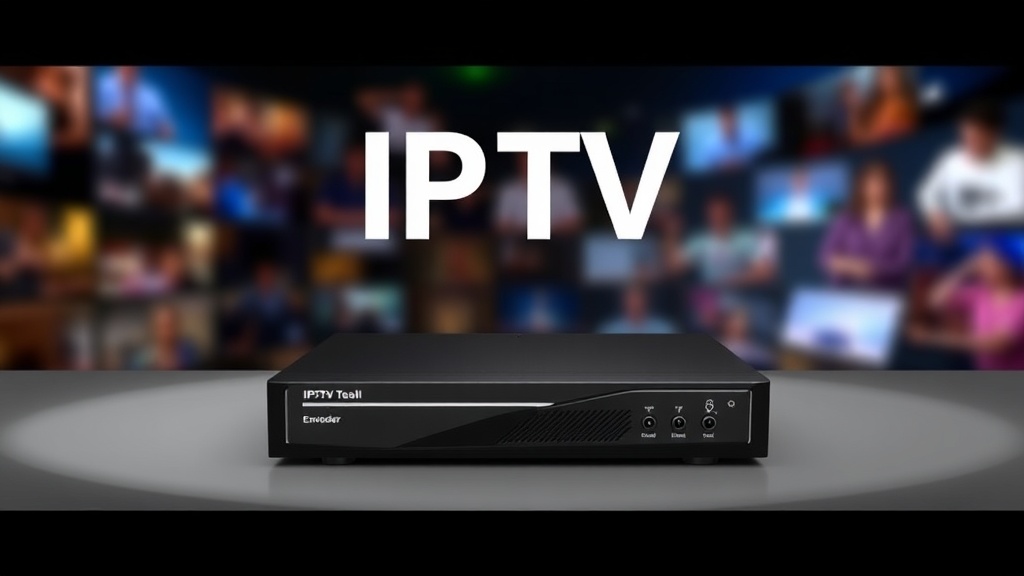
Selecting the appropriate Encoder IPTV hardware and software is a critical decision that impacts the quality, reliability, and cost-effectiveness of your streaming solution. The choice depends heavily on your specific needs, budget, and the scale of your operation. For small-scale deployments, a software-based encoder running on a standard computer might suffice, offering flexibility and lower initial costs. These often leverage powerful CPUs and GPUs for efficient encoding.
However, for professional broadcasting, high-volume streaming, or mission-critical applications, dedicated hardware encoders are often preferred. These devices are purpose-built for video encoding, offering superior performance, reliability, and often lower latency. They come in various forms, from compact, portable units to rack-mounted solutions for data centers. Factors to consider include input types (HDMI, SDI, composite), supported resolutions, bitrates, and the number of simultaneous streams.
Beyond the encoder itself, the accompanying software ecosystem is equally important. This includes management platforms for controlling encoders, monitoring streams, and distributing content. A robust management system simplifies operations, provides valuable analytics, and ensures the smooth functioning of the entire Encoder IPTV workflow. Look for features like remote management, automatic failover, and integration with content delivery networks (CDNs).
When evaluating software, consider its compatibility with various streaming protocols and its ability to integrate with other tools in your broadcasting chain, such as media servers, transcoders, and digital rights management (DRM) systems. The ease of use, technical support, and community resources available for a particular software solution can also be significant factors in your decision-making process. A well-integrated software suite can dramatically improve efficiency and reduce operational headaches. For a look at various channel offerings, check out our channels page.
Ultimately, the best Encoder IPTV solution is one that balances performance, cost, and ease of use while meeting your specific technical requirements. It’s often beneficial to conduct thorough research, read reviews, and even test different solutions before committing to a purchase. Investing time upfront in this selection process will save you considerable headaches and expenses down the line, ensuring a robust and future-proof streaming infrastructure.
Optimizing Your Encoder IPTV Stream for Quality and Performance
Optimizing your Encoder IPTV stream is crucial for delivering a high-quality viewing experience while efficiently utilizing bandwidth. This involves a multi-faceted approach that touches upon encoding settings, network configuration, and content delivery strategies. The goal is to strike a perfect balance between visual fidelity, minimal latency, and reliable delivery to a diverse audience with varying internet speeds.
One of the primary areas for optimization lies within the encoder settings themselves. This includes selecting the appropriate video codec (e.g., H.264, H.265), setting the correct bitrate for your target resolution and frame rate, and configuring parameters like GOP (Group of Pictures) length and B-frame usage. Higher bitrates generally yield better quality but consume more bandwidth, so finding the sweet spot is essential. Adaptive bitrate (ABR) streaming is a powerful technique here, where multiple versions of the stream at different bitrates are created, allowing the client device to automatically switch to the most suitable version based on network conditions.
Network optimization is another critical component. Ensuring a stable and high-bandwidth internet connection at the encoding source is paramount. For live streams, a dedicated internet line or a robust network infrastructure can prevent drops and interruptions. Furthermore, leveraging Content Delivery Networks (CDNs) is highly recommended for distributing your Encoder IPTV streams. CDNs cache content at geographically dispersed servers, bringing the content closer to viewers and significantly reducing latency and buffering, especially for a global audience.
Monitoring and analytics play a vital role in continuous optimization. Regularly tracking metrics such as stream health, viewer engagement, playback errors, and bandwidth usage can provide valuable insights into potential bottlenecks and areas for improvement. Many Encoder IPTV platforms offer built-in analytics tools, or you can integrate third-party solutions to gain a deeper understanding of your stream’s performance and audience behavior. This data-driven approach ensures your streaming service remains top-notch.
Finally, consider the audio quality. While video often takes center stage, clear and synchronized audio is equally important for a compelling viewing experience. Ensure your audio is encoded with appropriate codecs (e.g., AAC) and bitrates, and that it’s properly synchronized with the video. Attention to these details collectively contributes to an optimized Encoder IPTV stream that delights viewers and minimizes technical issues.
Security and Monetization Strategies for Encoder IPTV
Securing your Encoder IPTV content and implementing effective monetization strategies are vital for the sustainability and success of any streaming service. With valuable content being distributed, protecting it from unauthorized access and piracy is a top priority. Simultaneously, establishing clear revenue models ensures that your efforts are financially viable.
Digital Rights Management (DRM) is a cornerstone of content security for Encoder IPTV. DRM systems encrypt your content and control access based on licensing rules, preventing unauthorized copying, redistribution, and playback. Common DRM solutions include Widevine, PlayReady, and FairPlay, each catering to different platforms and devices. Implementing a robust DRM strategy ensures that only legitimate subscribers can view your premium content, safeguarding your intellectual property.
Access control mechanisms, such as user authentication and authorization, are also crucial. This involves verifying user identities and granting them access only to the content they are entitled to view. Token-based authentication, geo-blocking (restricting content based on geographical location), and IP address filtering are common techniques employed to manage who can access your streams. These measures, combined with DRM, create a strong defense against piracy.
On the monetization front, several strategies can be employed. Subscription Video On Demand (SVOD) is a popular model where users pay a recurring fee for unlimited access to a library of content. This provides a stable revenue stream and fosters viewer loyalty. Another model is Transactional Video On Demand (TVOD), where users pay per view or per download, ideal for new releases or premium events. For details on subscription options, visit our pricing page.
Advertising Video On Demand (AVOD) involves offering free content supported by ad insertions. This can include pre-roll, mid-roll, or post-roll advertisements. Hybrid models, combining elements of SVOD, TVOD, and AVOD, are also increasingly common, allowing content providers to diversify their revenue streams and cater to different audience preferences. The key is to choose a monetization strategy that aligns with your content type, target audience, and business goals, ensuring a healthy return on your Encoder IPTV investment.
Future Trends and Innovations in Encoder IPTV
The landscape of Encoder IPTV is constantly evolving, driven by technological advancements and shifting consumer demands. Staying abreast of future trends and innovations is crucial for anyone involved in this dynamic field. These developments promise even more immersive experiences, greater efficiency, and broader accessibility for digital content.
One of the most significant trends is the continued adoption of advanced video codecs. While H.265 (HEVC) is currently prevalent, newer codecs like AV1 and VVC (Versatile Video Coding) are emerging, promising even greater compression efficiency without sacrificing quality. These codecs are essential for delivering 8K and beyond ultra-high-definition content, virtual reality (VR), and augmented reality (AR) experiences with reduced bandwidth requirements. The continuous push for better compression will redefine what’s possible with Encoder IPTV.
The integration of Artificial Intelligence (AI) and Machine Learning (ML) into Encoder IPTV workflows is another exciting area. AI can be used for intelligent content recognition, automated metadata generation, and even dynamic content optimization based on real-time network conditions and viewer behavior. ML algorithms can predict network congestion, optimize bitrate adaptation, and personalize content recommendations, leading to a more seamless and tailored viewing experience. This smart integration will elevate the intelligence of streaming platforms.
Edge computing is also gaining traction, moving processing and content delivery closer to the end-user. For Encoder IPTV, this means potentially faster encoding, lower latency for live events, and more resilient content delivery by reducing reliance on centralized data centers. Edge encoders can process content locally, reducing the backhaul traffic and improving responsiveness, especially in remote or underserved areas. This decentralized approach enhances both performance and reliability.
Finally, the convergence of broadcast and IP technologies continues to accelerate. Hybrid broadcasting solutions that combine the best of traditional broadcast (e.g., DVB standards) with the flexibility of IP delivery are becoming more common. This allows for a more resilient and versatile content distribution ecosystem. As 5G networks become more widespread, they will further enhance the capabilities of mobile Encoder IPTV, enabling high-quality streaming on the go with unprecedented reliability and speed. These innovations collectively paint a picture of a very exciting future for Encoder IPTV.
FAQ Section
Q1: What is the primary function of an Encoder IPTV?
A1: The primary function of an Encoder IPTV is to convert analog or digital video and audio signals into a compressed, streamable digital format that can be delivered over an IP network. This process makes content suitable for internet-based distribution.
Q2: What video codecs are commonly used with Encoder IPTV?
A2: Common video codecs used with Encoder IPTV include H.264 (AVC) and H.265 (HEVC). Newer codecs like AV1 and VVC are also emerging, offering even greater compression efficiency for high-definition and ultra-high-definition content.
Q3: Can Encoder IPTV be used for live streaming?
A3: Yes, Encoder IPTV is extensively used for live streaming. Encoders capture real-time video and audio, compress it, and transmit it over an IP network, enabling live broadcasts of events, sports, news, and more to a global audience.
Q4: What is adaptive bitrate (ABR) streaming in the context of Encoder IPTV?
A4: Adaptive bitrate (ABR) streaming is a technique where an Encoder IPTV system creates multiple versions of a video stream at different bitrates and resolutions. The client device then automatically switches between these versions based on the viewer’s internet connection speed and device capabilities, ensuring optimal playback quality and minimizing buffering.
Q5: How does Encoder IPTV content get secured?
A5: Encoder IPTV content is secured through various methods, including Digital Rights Management (DRM) systems that encrypt content and control access, and access control mechanisms like user authentication, authorization, geo-blocking, and IP filtering. These measures protect content from unauthorized access and piracy.
Related IPTV Services
You may also visit the following websites for similar services: