IPTV 4K is revolutionizing the way we consume television content, offering an unparalleled viewing experience with breathtaking clarity and vibrant colors. As we move further into 2025, the demand for high-definition streaming continues to soar, making IPTV 4K an essential component for any modern entertainment setup. This comprehensive guide will delve deep into everything you need to know about IPTV 4K, from its technical foundations to choosing the best services and optimizing your viewing experience. Get ready to transform your living room into a cinematic paradise with the power of IPTV 4K.
Table of Contents
- Understanding the Power of IPTV 4K Technology
- Choosing the Best IPTV 4K Service Provider in 2025
- Essential Devices for an Optimal IPTV 4K Experience
- Maximizing Your IPTV 4K Performance and Troubleshooting Common Issues
- The Future of IPTV 4K: Trends and Innovations in 2025
- Why IPTV 4K is a Game Changer for Premium Entertainment
- FAQ About IPTV 4K
- Related IPTV Services
Understanding the Power of IPTV 4K Technology
At its core, IPTV (Internet Protocol Television) delivers television content over IP networks, rather than traditional broadcast, cable, or satellite formats. When you add “4K” to the mix, you’re talking about a resolution of 3840 x 2160 pixels, which is four times the detail of standard Full HD (1080p). This significant jump in pixel count translates to incredibly sharp images, finer details, and a more immersive viewing experience that truly brings content to life. The technology behind IPTV 4K relies on robust internet infrastructure and advanced compression techniques to deliver these large data streams efficiently.
The transition to IPTV 4K isn’t just about more pixels; it also involves improvements in color depth, often incorporating High Dynamic Range (HDR) technology. HDR expands the range of both contrast and color, making bright areas brighter and dark areas richer, with a wider spectrum of colors in between. This combination of increased resolution and enhanced color representation makes IPTV 4K a truly transformative viewing experience, especially for content that is natively produced in 4K, such as blockbuster movies, premium sports, and nature documentaries.
For seamless IPTV 4K streaming, a stable and high-speed internet connection is paramount. While specific requirements can vary, a minimum download speed of 25 Mbps is generally recommended for a single 4K stream, with higher speeds preferred for multiple streams or to avoid buffering. Service providers offering IPTV 4K often optimize their networks to handle the increased bandwidth demands, ensuring a smooth and uninterrupted viewing experience for their subscribers. Understanding these technical underpinnings is crucial for anyone looking to embrace the future of television with IPTV 4K.
The evolution of codecs also plays a vital role in the efficiency of IPTV 4K. Modern codecs like H.265 (HEVC – High Efficiency Video Coding) are designed to compress 4K video data more effectively than older standards like H.264, allowing for higher quality at lower bitrates. This means that even with the massive amount of data involved in 4K resolution, it can still be transmitted and streamed efficiently over typical home internet connections. As technology continues to advance, we can expect even more efficient methods for delivering stunning IPTV 4K content.
Choosing the Best IPTV 4K Service Provider in 2025
Selecting the right IPTV 4K service provider is critical to enjoying a high-quality viewing experience. In 2025, the market is flooded with options, making it essential to know what to look for. Start by researching providers that explicitly offer 4K channels and content. Not all IPTV services are created equal, and some may only offer upscaled HD content rather than native 4K. Always check their channel lineups and verify the availability of true 4K streams. A reputable provider will be transparent about their offerings and the quality of their service.
Reliability and server stability are paramount. Buffering and service interruptions can quickly ruin the immersive experience of IPTV 4K. Look for providers with a strong reputation for uptime and dedicated 4K servers. Reviews from existing users on independent forums and communities can provide valuable insights into a provider’s performance. Many providers offer trial periods, which are an excellent way to test the service quality, channel availability, and overall user experience before committing to a longer subscription. Consider exploring our IPTV pricing plans to see what options might suit your needs.
Beyond the technical aspects, consider the variety of content and features offered. Does the provider offer a wide range of 4K channels, including sports, movies, documentaries, and international content? Are there features like Electronic Program Guide (EPG), catch-up TV, or video-on-demand (VOD) in 4K? The user interface and compatibility with various devices are also important. A good IPTV 4K service should be easy to navigate and work seamlessly on your preferred streaming devices, whether it’s a smart TV, streaming stick, or media box.
Customer support is another often-overlooked factor. Should you encounter any issues with your IPTV 4K service, responsive and knowledgeable support can make a significant difference. Check for providers that offer multiple support channels (live chat, email, phone) and have a reputation for quick problem resolution. Ultimately, the best IPTV 4K provider will offer a balance of high-quality content, reliable service, robust features, and excellent customer support, all at a competitive price point.
Essential Devices for an Optimal IPTV 4K Experience
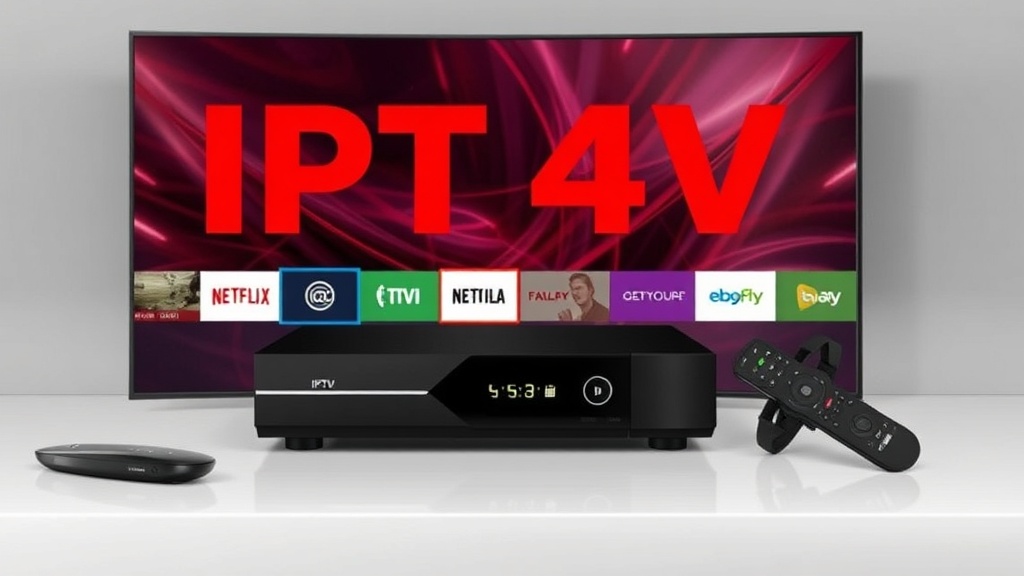
To fully appreciate the stunning visuals of IPTV 4K, you need the right hardware. The cornerstone of your setup will be a 4K compatible television. Most modern TVs sold today are 4K, but ensure yours supports HDR (such as HDR10, Dolby Vision, or HLG) for the best possible picture quality. A high-quality 4K TV will showcase the intricate details and vibrant colors that IPTV 4K offers. Without a 4K display, you simply won’t be able to see the full resolution, even if the content is being streamed in 4K.
Next, you’ll need a device capable of decoding and playing 4K IPTV streams. Popular options include dedicated IPTV boxes, Android TV boxes, Amazon Fire TV devices (4K models), Apple TV 4K, and certain smart TVs with built-in IPTV apps. When choosing a device, look for one with a powerful processor, ample RAM, and support for the latest video codecs, particularly H.265 (HEVC), which is crucial for efficient 4K streaming. Checking our list of supported devices can help you make an informed decision.
Don’t forget about your internet router. An outdated or low-quality router can bottleneck your internet speed, even if your ISP provides a fast connection. For IPTV 4K, a modern Wi-Fi 5 (802.11ac) or Wi-Fi 6 (802.11ax) router is recommended, especially if streaming wirelessly. For the most stable and reliable connection, a wired Ethernet connection directly from your router to your streaming device is always preferred, as it minimizes interference and ensures consistent bandwidth for your IPTV 4K streams.
Finally, consider your audio setup. While IPTV 4K primarily focuses on visuals, high-quality audio significantly enhances the overall immersion. A soundbar or a full home theater system with support for surround sound formats like Dolby Atmos or DTS:X can elevate your viewing experience, making movies and sports feel even more lifelike. Investing in a complete ecosystem of 4K-ready devices ensures that you’re getting the most out of your IPTV 4K subscription, delivering a truly premium entertainment experience.
Maximizing Your IPTV 4K Performance and Troubleshooting Common Issues
Even with the best IPTV 4K service and equipment, occasional issues can arise. Optimizing your setup can significantly improve performance. First and foremost, ensure your internet connection is robust and stable. Run speed tests regularly to confirm you’re getting the speeds your ISP promises. If you’re experiencing buffering, try connecting your streaming device directly to your router via an Ethernet cable instead of Wi-Fi. This simple step can often resolve many connectivity-related problems with IPTV 4K.
Regularly update your streaming device’s firmware and the IPTV application itself. Developers frequently release updates that improve performance, fix bugs, and enhance compatibility with IPTV 4K streams. Clearing the cache of your IPTV app can also help, as accumulated data can sometimes slow down performance. If you’re using an Android-based device, consider restarting it periodically to clear its memory and ensure smooth operation. These small maintenance tasks can make a big difference in your IPTV 4K viewing pleasure.
If you’re still facing issues, check the server status of your IPTV 4K provider. Sometimes, the problem might be on their end due to maintenance or unexpected outages. A quick check of their social media or support channels can often confirm this. Also, be mindful of other devices on your network that might be consuming significant bandwidth, such as large downloads or other streaming services. Temporarily pausing these activities can free up bandwidth for your IPTV 4K stream.
For more persistent problems, contacting your IPTV 4K provider’s customer support is the next step. Be prepared to provide them with details about your setup, internet speed, and the specific issues you’re encountering. They can often provide tailored advice or remote diagnostics to help resolve the problem. With a bit of proactive maintenance and troubleshooting, you can ensure your IPTV 4K experience remains consistently excellent, allowing you to fully enjoy the vast array of IPTV channels available.
The Future of IPTV 4K: Trends and Innovations in 2025
The landscape of IPTV 4K is continually evolving, with exciting trends and innovations shaping its future in 2025 and beyond. One significant trend is the increasing adoption of 8K resolution. While 4K is still becoming mainstream, early adopters and premium content creators are already experimenting with 8K, offering even more astonishing levels of detail. As bandwidth capabilities improve and 8K TVs become more affordable, we can expect IPTV 8K to emerge as the next frontier in ultra-high-definition streaming, building upon the foundations laid by IPTV 4K.
Another key innovation is the integration of artificial intelligence (AI) and machine learning (ML) into IPTV platforms. AI can personalize content recommendations, optimize streaming quality in real-time based on network conditions, and even enhance upscaling for non-4K content to look better on 4K displays. Imagine an IPTV 4K service that learns your viewing habits and proactively suggests new shows or movies in stunning 4K, or automatically adjusts bitrates to prevent buffering without you even noticing.
Interactive features and virtual reality (VR) integration are also on the horizon. Imagine watching a live sports event in IPTV 4K, where you can switch camera angles, access real-time statistics, or even experience the game from a VR perspective, putting you right in the action. These immersive experiences will move beyond traditional passive viewing, making entertainment more engaging and personalized. The combination of high-resolution IPTV 4K with interactive elements promises a truly revolutionary viewing paradigm.
Furthermore, cloud-based IPTV 4K solutions are gaining traction, offering greater flexibility and scalability for providers and users alike. This allows for easier content delivery, more robust infrastructure, and potentially lower costs. As content creation in native 4K continues to expand, driven by major studios and streaming platforms, the availability of diverse and high-quality IPTV 4K content will only grow, solidifying its position as the standard for premium television viewing. The future of IPTV 4K is bright, promising an even richer and more immersive entertainment experience for everyone.
Why IPTV 4K is a Game Changer for Premium Entertainment
IPTV 4K isn’t just an incremental upgrade; it’s a fundamental shift in how we experience entertainment. The sheer visual fidelity it offers transforms everything from blockbuster movies to live sports. Imagine watching a nature documentary where every leaf and feather is rendered with incredible precision, or a live football match where you can discern every blade of grass on the pitch. This level of detail creates a more engaging and immersive experience, making you feel closer to the action than ever before. The impact of IPTV 4K on premium content is profound, elevating the standard for home viewing.
Beyond resolution, the enhanced color and contrast provided by HDR, often bundled with IPTV 4K, make a significant difference. Colors appear more natural and vibrant, and the dynamic range between the brightest whites and deepest blacks is expanded, revealing details that would otherwise be lost. This is particularly noticeable in cinematic content, where directors meticulously craft every frame. With IPTV 4K, you’re seeing the content much closer to how the creators intended, making for a more authentic and impactful viewing experience.
The flexibility of IPTV 4K also contributes to its game-changing status. Unlike traditional broadcast methods, IPTV allows for a more personalized viewing experience, often including features like on-demand content libraries, catch-up TV, and multi-device compatibility. This means you’re not tied to a schedule or a single screen; you can enjoy your favorite 4K content whenever and wherever you choose. This level of convenience, combined with superior quality, makes IPTV 4K an incredibly attractive option for modern consumers.
For sports enthusiasts, IPTV 4K is a revelation. The ability to watch high-octane sports in stunning detail, with fast-moving action rendered smoothly, brings an unparalleled level of excitement to your living room. Every goal, every slam dunk, every dramatic finish is captured with breathtaking clarity. As more sports broadcasters adopt 4K production, the value proposition of IPTV 4K for live sports will only continue to grow, solidifying its position as the ultimate choice for premium entertainment. Embracing IPTV 4K means embracing the pinnacle of television viewing.
FAQ About IPTV 4K
What is the minimum internet speed required for IPTV 4K?
While requirements can vary slightly by provider and content, a minimum stable download speed of 25 Mbps is generally recommended for a single IPTV 4K stream. For optimal performance and to avoid buffering, especially with multiple users or devices, 50 Mbps or higher is often preferred.
Do I need a special TV for IPTV 4K?
Yes, to fully experience IPTV 4K, you need a 4K compatible television. Most modern TVs support 4K resolution (3840 x 2160 pixels). For the best picture quality, look for a TV that also supports HDR (High Dynamic Range) formats like HDR10, Dolby Vision, or HLG.
Can I watch IPTV 4K on any streaming device?
No, not all streaming devices support 4K resolution. You’ll need a device specifically designed for 4K streaming, such as a 4K-enabled Smart TV, an Amazon Fire TV Stick 4K, Apple TV 4K, NVIDIA Shield TV, or a dedicated Android TV box that supports 4K and HEVC (H.265) codec.
Is IPTV 4K content always available?
While IPTV 4K services are growing, the availability of native 4K content still depends on the provider and the specific channels or VOD library they offer. Many services may upscale HD content, but true native 4K content offers the best quality. Always check the provider’s channel list for explicit 4K offerings.
What’s the difference between IPTV 4K and regular HD IPTV?
The primary difference is resolution. IPTV 4K offers a resolution of 3840 x 2160 pixels, which is four times the detail of Full HD (1080p) at 1920 x 1080 pixels. This higher resolution results in significantly sharper images, finer details, and often includes enhanced color and contrast through HDR, providing a much more immersive viewing experience.
Related IPTV Services
You may also visit the following websites for similar services: