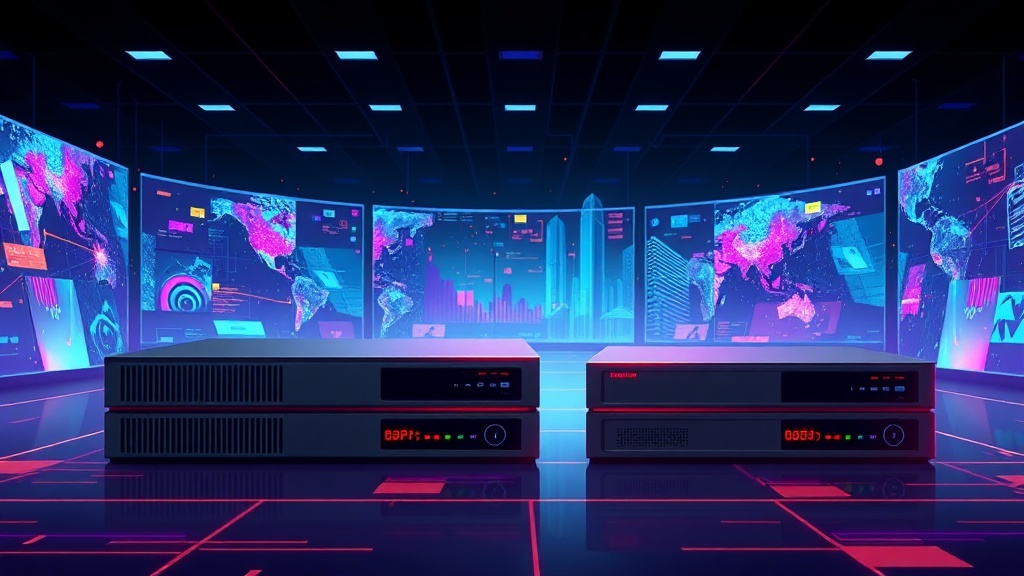
IPTV Encoders are the unsung heroes behind the seamless delivery of high-quality television content over the internet. In an era where streaming dominates entertainment, understanding the technology that makes it all possible is crucial. These powerful devices convert analogue or digital video signals into a format suitable for IP networks, enabling broadcasters, content creators, and service providers to deliver live and on-demand video to a global audience. Without robust IPTV Encoders, the crystal-clear images and lag-free experiences we’ve come to expect from our favorite IPTV services would simply not exist. This comprehensive guide will delve deep into the world of IPTV Encoders, exploring their functionality, types, key features, and how to choose the best one for your needs in 2025.
Table of Contents
- Understanding the Core Functionality of IPTV Encoders
- Types of IPTV Encoders: Hardware vs. Software Solutions
- Key Features to Look for in Modern IPTV Encoders
- Optimizing Your Workflow with Efficient IPTV Encoders
- The Role of IPTV Encoders in Delivering Diverse Channels
- Future Trends and Innovations in IPTV Encoders for 2025
- FAQ About IPTV Encoders
- Related IPTV Services
Understanding the Core Functionality of IPTV Encoders
At its heart, an IPTV encoder’s primary function is to transform raw video input into a streamable format. This involves several critical steps. First, the encoder receives a video signal, which could be from a camera, a satellite receiver, or a video server. This signal is often in an uncompressed or minimally compressed format, unsuitable for efficient transmission over IP networks due to its large bandwidth requirements.
Next, the encoder compresses the video using sophisticated algorithms. Common compression standards include H.264 (AVC) and H.265 (HEVC), which significantly reduce file size while maintaining visual quality. This compression is vital for minimizing bandwidth usage and ensuring a smooth viewing experience, even for viewers with varying internet speeds. Audio signals are also processed and compressed, typically using codecs like AAC or AC3, and then synchronized with the video.
Finally, the compressed video and audio streams are encapsulated into a transport stream, such as MPEG-TS (MPEG Transport Stream), and then packaged into an IP-friendly protocol like UDP, RTP, or HTTP Live Streaming (HLS) for transmission over the internet. This entire process, from input to output, is handled by the IPTV encoder, making it an indispensable component in any modern IPTV infrastructure.
Types of IPTV Encoders: Hardware vs. Software Solutions
When considering IPTV encoders, you’ll generally encounter two main categories: hardware encoders and software encoders. Each has its own set of advantages and disadvantages, making them suitable for different applications and budgets.
Hardware IPTV encoders are dedicated physical devices designed specifically for video encoding. They typically offer superior performance, lower latency, and higher reliability due to their specialized processors and optimized firmware. These encoders are often preferred for professional broadcasting, live events, and large-scale IPTV deployments where performance and stability are paramount. They can handle multiple streams simultaneously and often come with advanced features like error correction and redundant power supplies. However, hardware encoders tend to be more expensive and less flexible than their software counterparts.
Software IPTV encoders, on the other hand, are applications that run on general-purpose computers or servers. They offer greater flexibility, scalability, and are generally more cost-effective. Software encoders are ideal for smaller operations, content creators, and those who need to frequently update or customize their encoding workflows. While they might not match the raw performance of dedicated hardware, modern software encoders, especially when running on powerful servers, can deliver excellent quality and low latency. The choice between hardware and software often boils down to the specific requirements of the project, including budget, performance needs, and desired flexibility.
Key Features to Look for in Modern IPTV Encoders
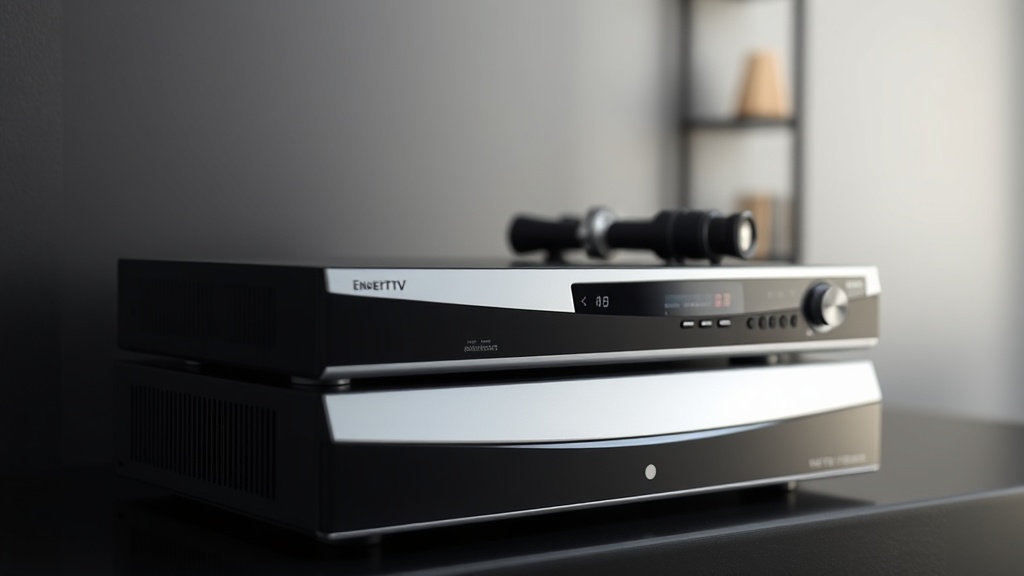
Selecting the right IPTV encoder involves evaluating a range of features to ensure it meets your specific operational and quality needs. One crucial aspect is support for various input types. A versatile encoder should handle HDMI, SDI, composite, and even IP inputs, providing flexibility for different source devices. Output formats are equally important; look for encoders that support common streaming protocols like HLS, RTMP, UDP/RTP, and SRT, which ensure compatibility with various CDNs and playback devices.
Video compression standards, particularly H.264 and H.265, are vital for balancing quality and bandwidth. H.265 (HEVC) offers greater compression efficiency, delivering similar quality at lower bitrates, which is beneficial for reducing IPTV subscription costs and improving delivery over constrained networks. Audio codec support, such as AAC-LC, HE-AAC, and AC3, is also essential for high-quality sound. Additionally, features like adaptive bitrate (ABR) streaming are critical for delivering an optimal viewing experience across diverse internet conditions, allowing the encoder to dynamically adjust stream quality based on the viewer’s bandwidth.
Advanced features like multi-channel encoding, which allows a single device to process multiple video streams simultaneously, can significantly improve efficiency for larger operations. Look for encoders with robust management interfaces, preferably web-based, for easy configuration and monitoring. Low latency capabilities are paramount for live broadcasting, ensuring minimal delay between the event and its reception by viewers. Finally, ensure the IPTV encoder you choose offers strong security features, including encryption and access control, to protect your content from unauthorized access and piracy.
Optimizing Your Workflow with Efficient IPTV Encoders
Implementing efficient IPTV encoders is not just about choosing the right hardware or software; it’s also about integrating them seamlessly into your existing workflow. A well-optimized workflow ensures smooth content acquisition, processing, and delivery. Begin by meticulously planning your signal flow, from source cameras and production switchers to the encoder itself. Ensure all connections are robust and that signal integrity is maintained throughout the chain.
Configuration of the IPTV encoders is another critical step. This involves setting appropriate bitrates, resolutions, and frame rates that balance video quality with network capacity. For live events, prioritize lower latency settings, while for on-demand content, you might opt for higher quality at the expense of slightly increased processing time. Leveraging features like pre-processing filters (e.g., de-interlacing, noise reduction) within the encoder can further enhance video quality before compression.
Integration with content delivery networks (CDNs) is also a key aspect of an optimized workflow. Many IPTV encoders offer direct integration with popular CDNs, simplifying the process of distributing your streams globally. Monitoring tools, both within the encoder’s interface and external network monitoring systems, are essential for tracking performance, identifying bottlenecks, and troubleshooting issues proactively. Regularly reviewing and adjusting your encoder settings based on real-world performance data will help maintain an efficient and high-quality IPTV service. Consider how your chosen IPTV solution will interact with various supported IPTV devices to ensure broad compatibility.
The Role of IPTV Encoders in Delivering Diverse Channels
IPTV encoders play a pivotal role in enabling service providers to offer a vast and diverse range of channels to their subscribers. By efficiently converting signals from various sources – whether satellite feeds, terrestrial broadcasts, or internal studio content – into IP-friendly streams, these devices are the backbone of any multi-channel offering. Imagine a scenario where a provider needs to deliver hundreds of live channels, each originating from a different source and potentially in a different format. Robust IPTV encoders are engineered to handle this complexity, simultaneously processing multiple inputs and outputting them as distinct, high-quality IP streams.
Furthermore, the advanced features of modern IPTV encoders, such as multi-bitrate encoding, are crucial for supporting different subscription tiers and device capabilities. For instance, a provider might offer an HD version of a channel for premium subscribers and an SD version for those with lower bandwidth or older devices. The encoder efficiently generates these multiple renditions from a single source, ensuring that every subscriber receives an optimized viewing experience. This flexibility in content delivery, supported by powerful IPTV encoders, is what allows services to offer such a rich and varied selection of IPTV channels, catering to diverse viewer preferences and technical environments.
Future Trends and Innovations in IPTV Encoders for 2025
The landscape of IPTV encoders is continuously evolving, driven by advancements in video technology and consumer demand for higher quality and more immersive experiences. Looking ahead to 2025, several key trends are set to shape the future of these essential devices. One major development is the increasing adoption of 8K encoding. As 8K displays become more prevalent, encoders will need to efficiently handle these ultra-high-resolution streams, requiring even more powerful processors and sophisticated compression algorithms, likely building upon enhanced H.265 or new H.266 (VVC) standards.
Another significant trend is the rise of AI and machine learning in encoding workflows. AI-powered encoders can intelligently analyze video content in real-time, optimizing compression parameters on a per-scene basis to achieve better quality at lower bitrates. This intelligent encoding can lead to substantial bandwidth savings without compromising visual fidelity. Edge computing will also play a larger role, with more encoding functions being performed closer to the content source to reduce latency and alleviate strain on central data centers. This distributed encoding approach will be particularly beneficial for live sports and interactive content.
Finally, we can expect greater integration of cloud-based encoding solutions. Cloud encoders offer unparalleled scalability and flexibility, allowing broadcasters to spin up encoding resources on demand for large events or fluctuating content needs. This shift towards cloud-native and hybrid encoding models will provide greater agility and cost-effectiveness for IPTV service providers, making advanced IPTV encoders more accessible and powerful than ever before.
FAQ About IPTV Encoders
Q1: What is the primary purpose of an IPTV encoder?
A1: The primary purpose of an IPTV encoder is to convert video and audio signals from various sources (e.g., cameras, satellite receivers) into a compressed, IP-friendly format suitable for streaming over the internet to devices like smart TVs, computers, and mobile phones.
Q2: What’s the difference between H.264 and H.265 compression for IPTV Encoders?
A2: H.265 (HEVC) is a more advanced video compression standard than H.264 (AVC). It offers significantly better compression efficiency, meaning it can deliver the same video quality at roughly half the bitrate of H.264, or significantly higher quality at the same bitrate. This makes H.265 ideal for 4K and 8K content and for reducing bandwidth consumption.
Q3: Can a single IPTV encoder handle multiple channels simultaneously?
A3: Yes, many professional-grade IPTV encoders are designed for multi-channel encoding. These devices can ingest and process several independent video streams concurrently, making them highly efficient for broadcasting operations that need to deliver a large number of channels.
Q4: Why is low latency important for IPTV Encoders, especially for live content?
A4: Low latency is crucial for live content because it minimizes the delay between the actual event and when viewers see it on their screens. For sports, news, and interactive broadcasts, a low-latency IPTV encoder ensures a near real-time experience, enhancing viewer engagement and preventing spoilers from social media.
Q5: What are the main factors to consider when choosing an IPTV encoder?
A5: Key factors include input types supported (HDMI, SDI, IP), output protocols (HLS, RTMP, UDP), compression standards (H.264, H.265), desired video quality and resolution, latency requirements, number of channels to encode, management features, scalability, and budget. The choice between hardware and software encoders also depends on specific needs.
Related IPTV Services
You may also visit the following websites for similar services: